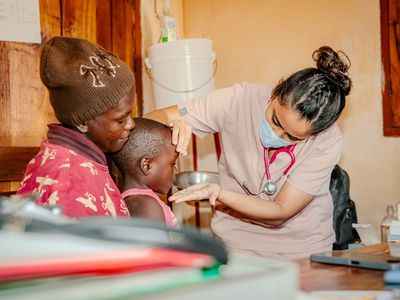
DAR ES SALAAM — When parents arrived at a paediatric medical camp in Mugumu earlier this year, many expected nothing more than routine consultations for their children. Instead, doctors began noticing something unexpected. Child after child showed signs of sickle cell disease. Some parents had never heard of the condition. Others already knew their children were living with it but had struggled to maintain treatment because of the high cost of specialist consultations, laboratory tests, medication and repeated journeys to distant referral hospitals. By the end of the day, the medical team had uncovered far more than individual cases. They had identified a pressing healthcare need that had largely gone unnoticed. The question was no longer how many children had been diagnosed. It was what should happen next. That question extends far beyond a single medical camp. Every year, Tanzania attracts millions of dollars in investment into tourism, conservation and infrastructure. These investments create jobs, stimulate local economies and draw visitors from across the world. But perhaps the most meaningful measure of investment is not what it builds. It is what it leaves behind for the people who call these places home. For communities surrounding Serengeti National Park, development should not be measured solely by visitor arrivals or financial returns. It should also be measured by whether children are healthier, whether young people have greater opportunities, whether local businesses thrive and whether communities become stronger because investment has arrived. The discovery in Mugumu became one example of what responsible investment can achieve. Rather than organising another one-day medical outreach, Mapito Safari Camp, with support from Delaware Investment Limited and implementation by the Give a Future Foundation, chose a different path. In April 2026, the partners launched a structured sickle cell programme designed to provide continuous care for children from Robanda and surrounding communities. The programme offers free screening, laboratory investigations, prescribed medication, routine clinical reviews and continuous follow-up for every enrolled child. Each patient has an individual treatment plan supported by comprehensive medical records, while a paediatric specialist travels from Dar es Salaam every three months to review patients alongside local healthcare workers. The programme began with four children. Four months later, it has expanded to support 34 children, with no limit on the number of beneficiaries. Every child diagnosed and requiring treatment is enrolled, and organisers hope to reach many more families as awareness grows. Those figures tell only part of the story. For families living with sickle cell disease, continuity of care is just as important as diagnosis. Knowing that medicines will remain available, appointments will continue and medical professionals will regularly monitor their children's progress gives parents the confidence to seek treatment early and remain committed to long-term care. Healthcare built on continuity creates something that cannot easily be measured in statistics. It builds trust. According to Serengeti District Medical Officer Dr Lusubilo Adam, the programme addresses one of the district's most persistent healthcare challenges. "Mapito is one of our conservation partners operating tourism activities within the Serengeti ecosystem. As a way of giving back to the community that welcomed them in Robanda Village, the company has invested significantly in improving local healthcare services," he said. He said the company's support has gone beyond the sickle cell programme to include upgrading Robanda Health Centre through the provision of medical equipment and essential medicines, including a commitment to supply enough medicines to meet the facility's needs for an entire year. The partnership has also strengthened the district's healthcare workforce. "So far, Mapito has supported the deployment of one doctor, with plans to add two more. These investments are helping us improve access to quality healthcare for communities that have historically faced significant challenges in accessing specialised medical services," Dr Adam said. For many residents of Robanda and neighbouring villages, specialist healthcare has often meant travelling approximately 130 kilometres to Musoma Regional Referral Hospital or nearly 270 kilometres to Bugando Zonal Referral Hospital in Mwanza. Although treatment at referral hospitals may sometimes be subsidised, transport, accommodation and other incidental costs often prevent patients from making the journey. "Many patients simply cannot afford the additional costs associated with travelling for specialised care," Dr Adam explained. "By bringing treatment closer to home, this programme removes one of the biggest barriers to healthcare." He noted that the initiative has brought considerable relief to families because sickle cell medication remains expensive, while enrolment in health insurance schemes is still relatively low across many rural communities. Dr Adam believes the programme has also strengthened the relationship between conservation and surrounding communities.
"We aggregate wires to encourage regional discovery, sending readers directly back to the original source to explore full coverage."
This is a normalized overview of the breaking feed event. The complete, official release detailing all points, background context, and statements remains hosted by the original publisher.