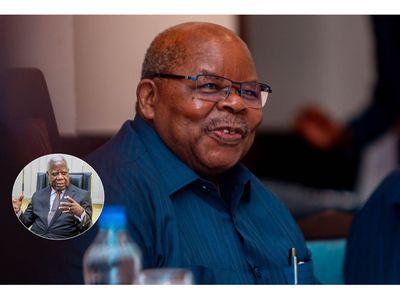
DAR ES SALAAM — As Tanzania marks six years since the death of third-phase President Benjamin Mkapa, veteran diplomat Ambassador Ami Mpungwe has described him as the leader who steered the country away from an outdated economic system and laid the foundations for a modern and resilient economy. Mr Mkapa died in Dar es Salaam on July 24, 2020, at the age of 81. He was laid to rest on July 29, 2020, in his home village of Lupaso in Masasi District, Mtwara Region. During his lifetime, Mr Mkapa led Tanzania for a decade, from 1995 to 2005, and is remembered for his significant contribution to strengthening the economy, expanding infrastructure, establishing regulatory institutions and introducing modern systems whose benefits continue to be felt today. Today, July 24, 2026, marks six years since his passing, leaving behind a legacy of a country that continues to grow on the foundations laid during his administration. This period coincided with a critical phase of economic reform. In an exclusive interview with The Citizen's sister newspaper, Mwananchi, Ambassador Mpungwe reflected on his long association with the late president and the role he played in building a stronger economy and moving Tanzania away from a socialist system that had outlived its effectiveness. Mr Mpungwe, who served as Tanzania's first Ambassador to South Africa from 1994 to 1999, said he came to know Mr Mkapa well, having served twice as Minister for Foreign Affairs, and remembers him as an outstanding diplomat. He said Mr Mkapa's first job after graduating from university was at the Ministry of Foreign Affairs before he moved into journalism and later entered politics. Ambassador Mpungwe said he worked closely with Mr Mkapa, describing him as the leader who recognised his potential. At the same time, he was still a junior officer and entrusted him with diplomatic responsibilities, work he carried out before joining the private sector. He remembers Mr Mkapa as the president who fundamentally transformed Tanzania by moving the country away from a socialist economic system and embracing a free-market economy in line with global changes. "For many years, our country followed a socialist system under a one-party state. When President Ali Hassan Mwinyi came into office, he began easing the state's economic monopoly through his Ruksa policy and also introduced a multiparty political system," he said. According to Ambassador Mpungwe, Mr Mkapa became the first president to be elected under the multiparty system for both of his terms in office, and he completed both. He said President Mwinyi had initiated the liberalisation process, but it was Mkapa who modernised Tanzania's economy after years in which socialist policies had become outdated and had constrained economic growth. "In those days, you could not obtain basic goods without queuing or securing permits. But when President Mkapa came to power, his priority was to strengthen the country's macroeconomic fundamentals. The country was burdened by a severe debt crisis, and he managed to relieve that burden by securing debt relief under the Highly Indebted Poor Countries (HIPC) Initiative," he said. "He also introduced reforms that opened up the private sector. One of the most important areas he strengthened was the mining sector. Despite Tanzania's vast mineral wealth, the country was hardly known as a major mineral producer," added Ambassador Mpungwe. He said Mr Mkapa introduced the 1997 Mineral Policy, followed by the Mining Act of 1998. "At that time, Tanzania's mineral exports were virtually non-existent. But by 2001/02, the country had risen from exporting almost nothing to becoming Africa's third-largest gold producer after South Africa and Ghana," he said. He said other sectors experienced similar reforms, helping Tanzania achieve sustained economic growth. Beyond large-scale economic reforms, Mr Mpungwe said Mr Mkapa also focused on improving the lives of ordinary Tanzanians through the National Strategy for Growth and Reduction of Poverty (Mkukuta) and the Property and Business Formalisation Programme (Mkurabita). "He addressed every level of the economy, from macroeconomic reforms to supporting small-scale entrepreneurs through Mkukuta and Mkurabita," said Ambassador Mpungwe, now 75. He added that Mr Mkapa also established Tanzania's modern regulatory authorities as part of the country's transition to a market economy. According to Mr Mpungwe, operating a liberalised economy without appropriate laws and regulatory institutions would have been impossible. "That is why authorities such as the Energy and Water Utilities Regulatory Authority (Ewura), the Tanzania Communications Regulatory Authority (TCRA), the Surface and Marine Transport Regulatory Authority (Sumatra) and others were established," he said. "All these reforms were aimed at building a modern economy, moving it away from a primitive system and transforming it into one capable of supporting sustainable growth," he added. Lessons from Mkapa Ambassador Mpungwe said today's leaders have much to learn from Mr Mkapa, particularly his ability to respond to the challenges and opportunities of his time, his willingness to listen, his decisiveness and his commitment to implementing agreements reached with stakeholders. "I knew Mr Mkapa as someone who stood firmly by his convictions, yet he was always willing to listen to advice. If he agreed with your arguments, he accepted them. But at the same time, he remained a man of principle who could not easily be swayed," he said, describing the former leader as a person who valued dialogue and consultation. "For example, after I joined the private sector, he was instrumental in establishing the CEO Roundtable. He would spend an entire day meeting chief executives of major companies, personally taking notes, listening carefully, recording their views and following up on the issues they raised," he said. Ambassador Mpungwe also recalled Mkapa's efforts to promote the mining sector. "In 1998, in Arusha, he invited leaders of mining companies from across Africa and beyond. He spent three days listening to them collectively and individually," he recalls. "That is why the mining sector grew so rapidly, moving from virtually zero gold exports in 1998 to becoming Africa's third-largest gold producer by 2001, after South Africa and Ghana," adds Ambassador Mpungwe. "He was always open to dialogue, constructive advice and discussion. More importantly, once an agreement had been reached, you could be confident that he would honour and implement it," concludes Ambassador Mpungwe.
"We aggregate wires to encourage regional discovery, sending readers directly back to the original source to explore full coverage."
This is a normalized overview of the breaking feed event. The complete, official release detailing all points, background context, and statements remains hosted by the original publisher.