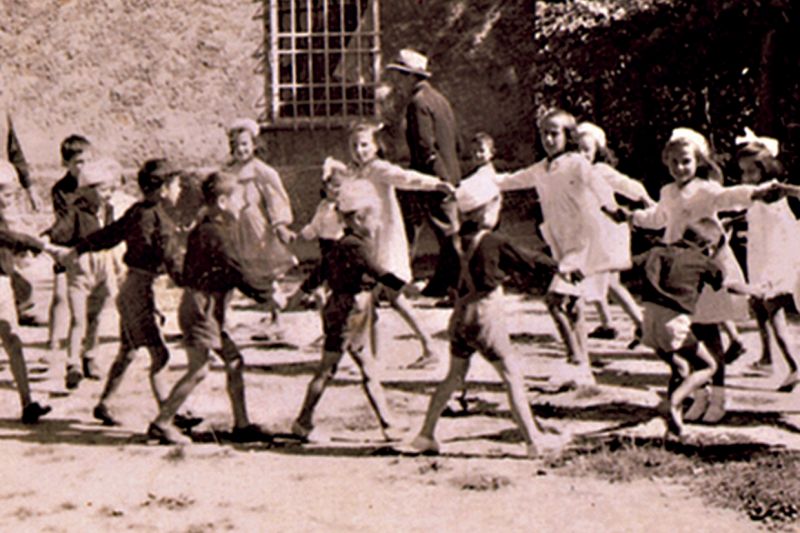
WIRE — Nazi war crime occurred on 12 August 1944. Italy on Wednesday marks the 82nd anniversary of the Nazi massacre of 560 unarmed civilians, including around 130 children, in the village of Sant'Anna di Stazzema in Tuscany. The mass killing on 12 August 1944 - one of the worst civilian massacres in western Europe during world war two - was carried out by Waffen-SS troops as they retreated, with the help of Italian fascists disguised in German uniforms. The soldiers rounded up villagers and refugees, locking them in barns and stables before executing them systematically with machine guns or by forcing them into cellars and throwing hand grenades inside. Church massacre The Nazis massacred around 100 people at the village church, including local priest Fiore Menguzzo, before burning their corpses with church pews and setting fire to the whole village. The victims were mainly women, elderly people and children, the youngest of whom was newborn baby Anna Pardini, just 20 days old. One heroic victim, Genny Bibolotti Marsili, was taken from her home with her young son Mario and elderly parents to a stable along with a group of other people. Once inside the building, she hid Mario between two slabs of rock behind the door and warned him to be quiet. After troops opened fire on the group, a soldier returned a few minutes later to make sure everyone was dead. Genny, seriously wounded but still alive, feared for the fate of her son, still in hiding. With a last gasp of strength she took off a wooden clog and threw it at the soldier, to distract him. He responded by shooting her dead, in front of Mario, who remained silent as his mother had told him. The Nazis then set fire to the building with a flame thrower. Mario suffered severe burns but was rescued and taken to Valdicastello hospital, where he spent the next year and a half recovering from his injuries. Almost 60 years later Mario would attend a ceremony at the Quirinale in Rome where his mother posthumously received the Medaglia d'Oro di Merito Civile, Italy's highest civilian award for bravery, from then Italian president Carlo Azeglio Ciampi. Cabinet of shame Incredibly, the massacre only became public knowledge in 1994, when almost 700 reports about the atrocity were found by chance by prosecutors seeking evidence to incriminate Nazi war criminal Erich Priebke in the Fosse Ardeatine Massacre. The files were discovered in a cabinet kept behind a locked gate, its doors facing the wall, hidden away in the basement of the military court in Rome. The documents found in the "cabinet of shame", as it was called by the Italian media, led to prosecutors identifying 10 Nazi officers responsible for the massacre. After a year-long trial in which they were tried in absentia at a court in La Spezia, the 10 German defendants were convicted in 2005 and sentenced to life in prison. However due to their advanced age and the refusal of Germany to extradite them, none of the men ended up going to jail. President Mattarella In a statement to mark the anniversary, Italy's president Sergio Mattarella remembered "the innocent - women, elderly, children - killed mercilessly in Sant'Anna and the hamlets of Stazzema, their bodies desecrated and burned, trampling on every human feeling." The "victory over Nazi-Fascism paved the way for rebirth", Mattarella said, while sounding the alarm that "wars have once again cast their shadow over our times" amid a re-emergence of "the desire for domination". 2026 commemorations This year's commemorative programme will see Movimento 5 Stelle leader Giuseppe Conte deliver the official speech on Wednesday, with closing remarks from deputy premier and foreign minister, Antonio Tajani. Stazzema mayor Maurizio Verona said: "Remembrance cannot last just one day a year. It cannot be a place where a wreath is laid and then we return to normal political confrontation, forgetting the significance of what happened here." "Sant'Anna demands something more" - Verona said in a statement - "It demands consistency. It demands that the fight against all forms of hatred, denial of human dignity, and violence become a daily commitment. It calls for investment in the culture of remembrance, in the education of new generations, and in the defense of democracy." For details of the 2026 commemorations to mark the anniversary of the massacre see Sant'Anna in Stazzema website. Photo: Children playing in the square of the church of Sant'Anna di Stazzema a few days before the Nazi massacre in August 1944. All the children, except one, in this photo, were killed.
"We aggregate wires to encourage regional discovery, sending readers directly back to the original source to explore full coverage."
This is a normalized overview of the breaking feed event. The complete, official release detailing all points, background context, and statements remains hosted by the original publisher.